Institutional Trading Risk Management Workbook
This educational workbook is created by TradeSafeCalc to visually explain professional risk management concepts used by disciplined traders. It complements our in-depth articles and trading tools.
1. Institutional Trading Risk Management – Practical Learning Workbook
When people look at professional or institutional traders, they often assume success comes from advanced strategies or secret market knowledge. In reality, the biggest difference is how these traders handle risk. Professionals do not focus on how much money they can make on a single trade. They focus on how much they can afford to lose without damaging their account. Before entering any trade, risk is already planned. This includes how much capital will be used, where the trade will be exited if it goes wrong, and how that loss fits into the overall account size. Because these decisions are made in advance, emotions play a much smaller role once the trade is active.
For example, even if a setup looks very strong, professional traders still keep position sizes controlled. They understand that markets are unpredictable and that no setup works every time. By limiting risk on each trade, they make sure one bad decision cannot undo weeks or months of progress. Another important habit is consistency. Professionals follow the same rules during winning periods and losing periods. They do not increase risk after a few good trades, and they do not chase losses after a bad day. This stability protects both capital and mindset. For individual traders, adopting this approach can be a turning point. Trading becomes less about guessing the market and more about managing yourself. Over time, this focus on risk creates smoother results and long-term confidence.
2. “Why Risk Control Is the Backbone of Successful Trading”
Risk management in trading is not about avoiding losses completely. Losses are a normal part of trading and happen to everyone. What matters is how those losses are controlled. At its core, risk management is about protecting your capital so you can continue trading tomorrow, next week, and next year. Many beginners focus only on profits. They enter trades thinking about how much they can make, but they rarely think about how much they could lose. This mindset often leads to oversized positions and emotional decisions. When a trade goes wrong, the loss feels bigger than expected, which affects confidence and judgment.
Professional traders approach this differently. Before entering a trade, they already know the maximum amount they are willing to lose. This could be a fixed percentage of their account or a predefined monetary amount. Once that limit is set, the trade is planned around it, not around hope or prediction. Risk management also supports long-term survival. Traders who chase quick profits often take excessive risks and burn out quickly. Those who manage risk properly may grow slower, but they stay consistent. Over time, staying in the market matters more than any single winning trade. In simple terms, good risk management shifts trading from gambling to a controlled process. It allows traders to make clear decisions, accept losses calmly, and focus on long-term progress instead of short-term excitement.
3. “The Real Reasons Traders Struggle to Stay Profitable”
Most traders do not lose money because the market is unfair or unpredictable. They lose money because of habits that slowly damage their account. One of the most common problems is overtrading. When traders take too many trades in a short time, decision quality drops. Instead of waiting for clear setups, they start forcing trades out of boredom or frustration. Another major issue is trading without a proper stop-loss. Some traders avoid stop-losses because they do not want to accept a loss. Others move their stop further away hoping the market will turn back. In many cases, a small loss becomes a large one simply because there was no clear exit plan.
Emotions also play a big role in losing money. Fear can cause traders to exit good trades too early, while greed can push them to hold trades longer than planned. After a loss, some traders try to recover quickly by taking impulsive trades. This usually makes the situation worse. Successful traders focus less on being right and more on staying disciplined. They accept losses as part of the process and protect their capital by following rules. Over time, controlling behavior matters far more than finding the perfect strategy.
4. “How Proper Position Sizing Keeps Risk in Balance”
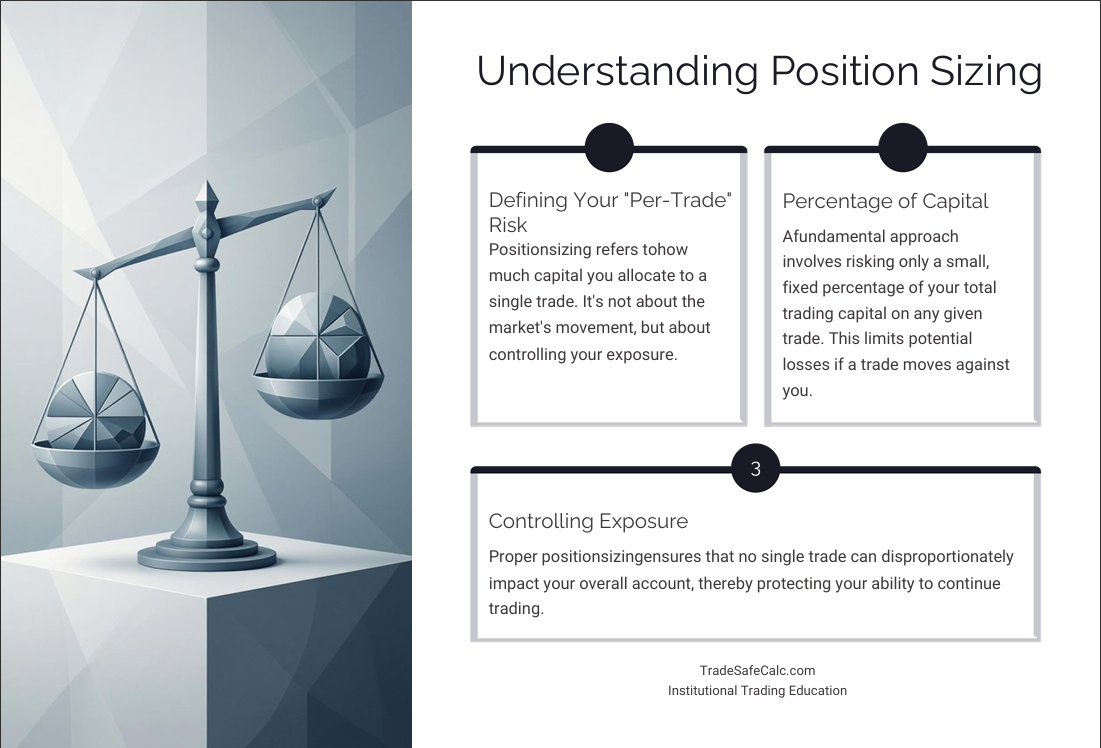
Position sizing is simply about deciding how much of your money you put into one trade. Many traders misunderstand this and think position size depends on how confident they feel. In reality, confidence has nothing to do with it. Position sizing exists to protect your account from one bad trade. A common mistake is using too much capital on a single trade because the setup “looks perfect.” Markets do not care how good a trade looks. Even strong setups can fail. When too much money is involved, losses feel heavier and emotions take over.
A simple real-life example makes this clear. Imagine you have a ₹1,00,000 trading account. If you risk ₹10,000 on one trade and it fails, you lose 10% in a single move. Recovering that loss now requires emotional pressure and riskier decisions. Instead, if you risk only ₹1,000 per trade, one loss becomes manageable and does not affect your confidence. Professional traders use fixed percentages or fixed amounts for this reason. They make sure no single trade can seriously harm their account. This allows them to stay calm, follow their plan, and take the next trade without hesitation. Proper position sizing turns trading into a controlled activity. It removes fear, limits damage, and gives traders the ability to survive long enough to improve and grow consistently.
5. “Balancing Risk and Reward Before Every Trade”
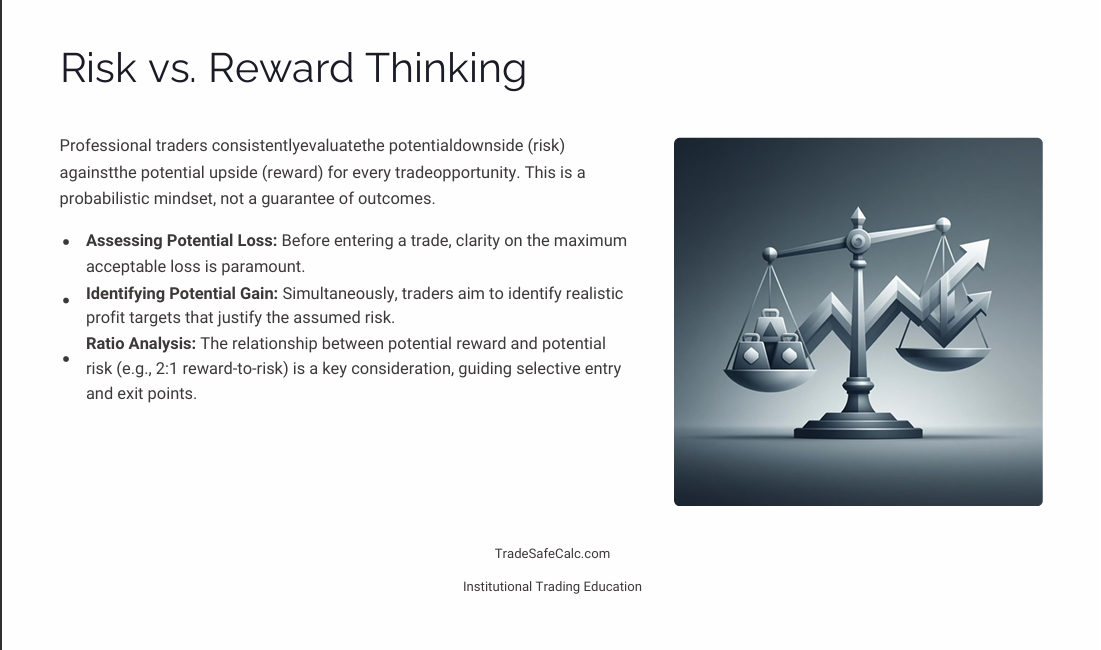
Many traders enter a trade thinking only about profit. They focus on where the price could go if everything works out. Professional traders reverse this thinking. Their first question is always, “What happens if this trade goes wrong?” Only after that do they consider the possible reward. Risk-to-reward thinking means comparing potential loss with potential gain before placing a trade. If the possible loss is large and the reward is small, the trade is usually avoided, even if the setup looks attractive. This habit protects traders from slowly draining their account through poor trade selection.
A simple example makes this clear. Imagine a trade where you risk ₹1,000 to make800. Even if you win often, the math works against you over time. Now compare that to risking ₹1,000 to make ₹2,000. You do not need to win every trade for the account to grow. Losses are balanced by stronger winners. Professional traders use this logic to stay selective. They wait for trades where the reward clearly justifies the risk. This reduces emotional trading and improves consistency. By focusing on risk first and reward second, trading becomes more structured. Decisions are based on logic instead of excitement, helping traders stay disciplined and patient over the long run.
6. “Mastering Emotions for Consistent Trading Performance”
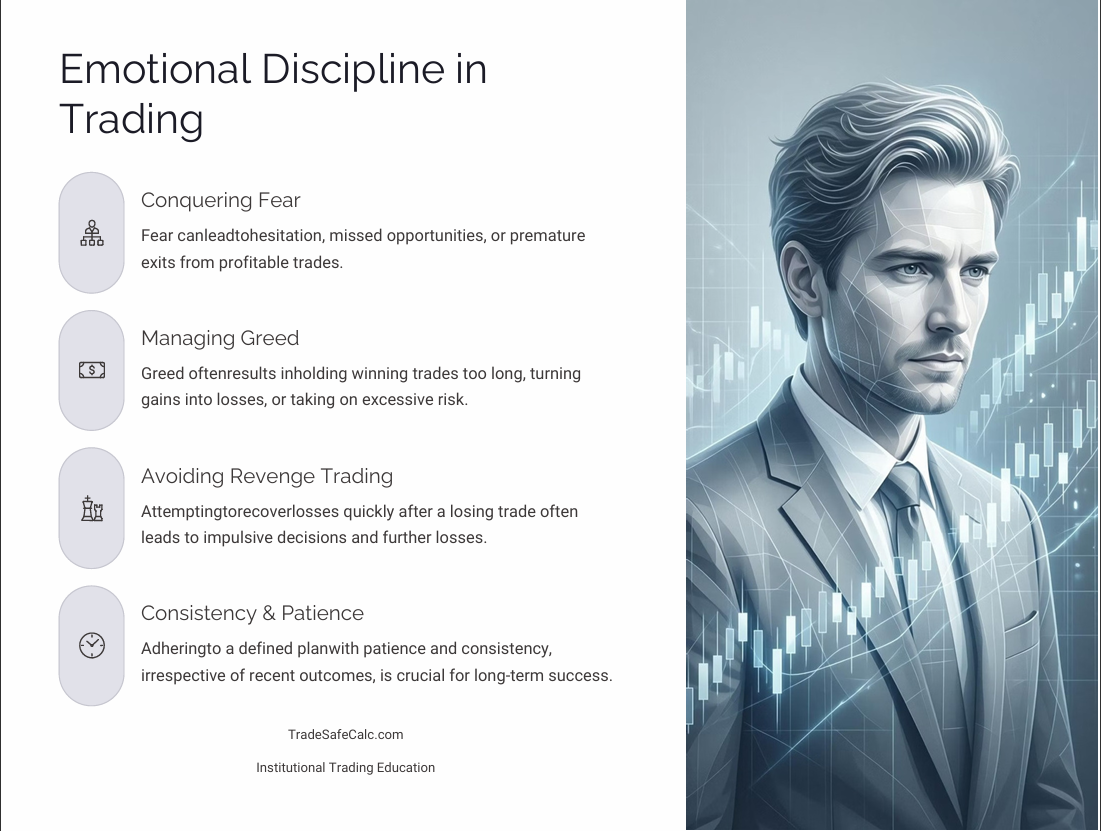
Emotions play a much bigger role in trading than most people expect. Fear, greed, and frustration often influence decisions more than analysis or planning. Without emotional discipline, even a good trading strategy can fail. Fear usually appears after a few losses or during fast market movements. A trader may hesitate to enter a valid trade or exit too early just to feel safe. For example, a trader might close a profitable position quickly because they are afraid the profit will disappear, only to watch the market continue in their original direction. Greed shows up when trades start working well. Instead of following the plan, traders may hold positions longer than intended, hoping for more profit. In many cases, this turns a good trade into a loss. Another common issue is revenge trading. After a losing trade, some traders try to recover the loss immediately by taking impulsive trades, which often leads to even bigger losses.
Emotional discipline means sticking to your rules regardless of recent results. Professionals do not change their behavior after a win or a loss. They treat each trade as one small part of a long process. By staying patient and consistent, traders reduce emotional stress and avoid unnecessary mistakes. Over time, emotional control becomes one of the most valuable skills a trader can develop, often more important than any technical setup.
7. “Structured Risk Plan for Long-Term Trading Success”
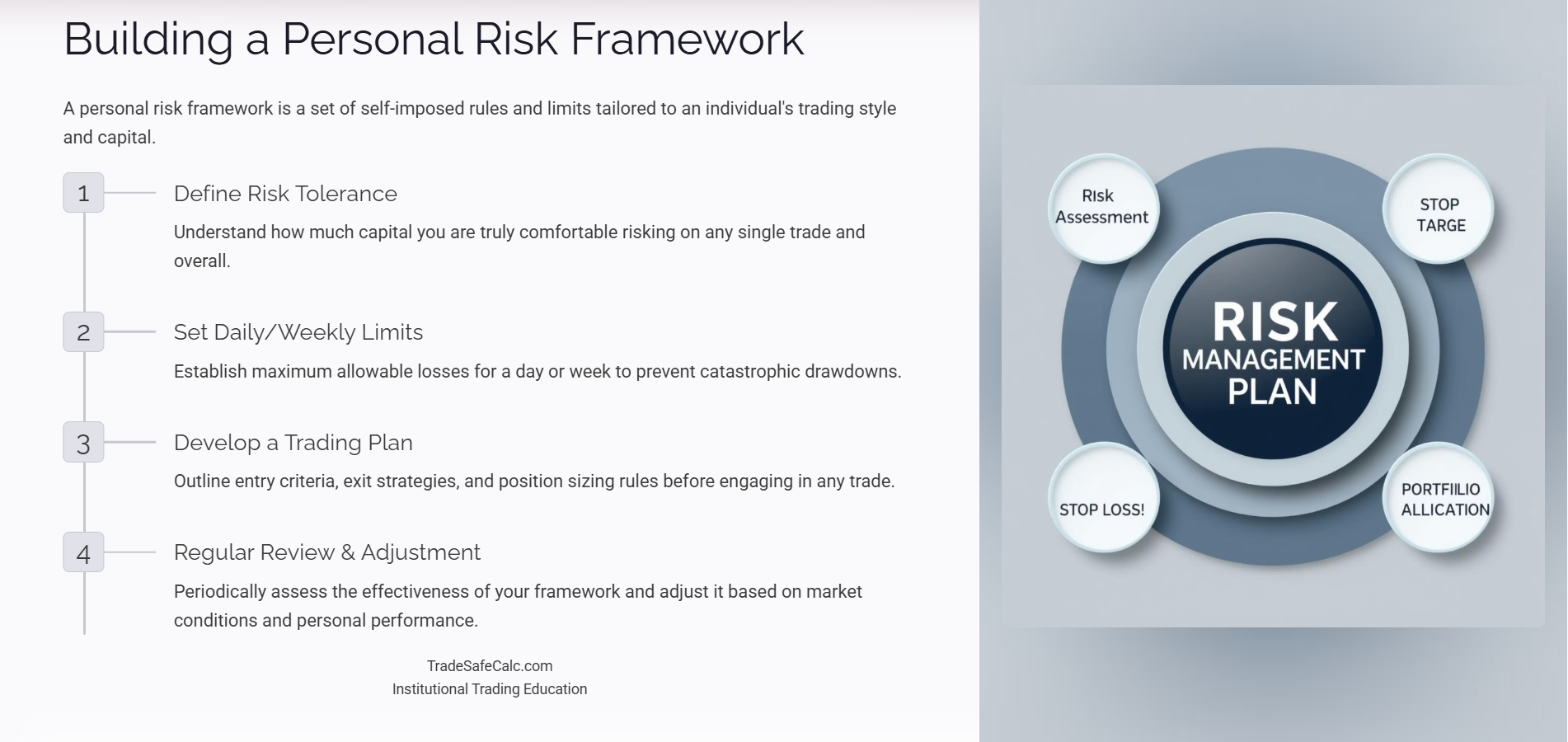
A personal risk framework is simply a set of rules you follow every time you trade. It is not about copying someone else’s system. It is about knowing your limits and creating boundaries that protect your capital and mindset. The first step is understanding how much risk you are comfortable taking on a single trade. Some traders can handle small drawdowns calmly, while others feel stressed after even minor losses. There is no right or wrong level, but it must be honest. Trading with risk that feels too large often leads to emotional decisions.
Daily or weekly loss limits are another important part. For example, if a trader decides to stop trading after losing 2% in a day, it prevents frustration from turning into revenge trading. This rule alone saves many accounts from serious damage. A trading plan ties everything together. It defines when to enter, when to exit, and how much to risk. Without a plan, decisions change based on mood and recent results. Finally, a good framework is reviewed regularly. If market conditions change or mistakes repeat, adjustments are made. Professional traders do this often. By building and following a personal risk framework, trading becomes more controlled. It reduces stress, builds consistency, and helps traders stay in the market long enough to improve and grow.
8. “Risk Management mistakes That Cost Traders Money”
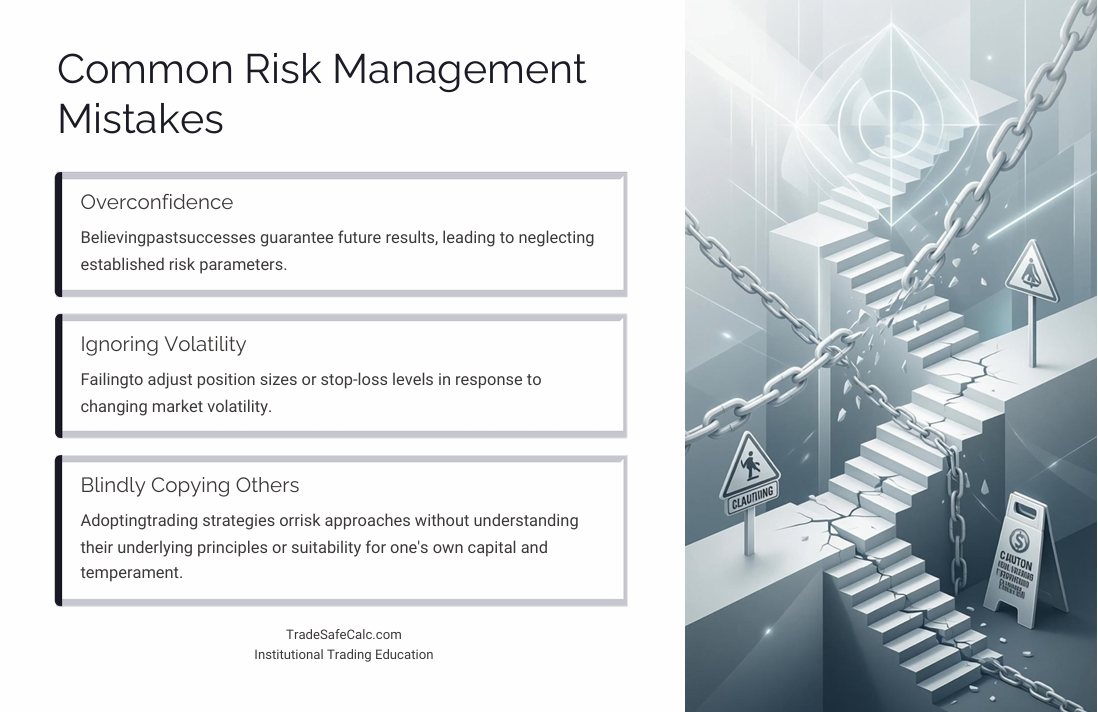
Many traders understand risk management in theory but struggle to apply it consistently. One of the most common mistakes is overconfidence. After a few winning trades, traders often feel they have “figured out” the market. This leads them to increase position size or ignore their own rules. When the market changes, losses come faster than expected. Ignoring volatility is another frequent problem. Markets do not behave the same every day. A position size that works in a calm market can become risky during high volatility. Some traders keep using the same stop-loss and size even when price movement becomes aggressive, which exposes them to larger losses.
Blindly copying other traders is also risky. A strategy that works for someone else may not suit your capital size, risk tolerance, or schedule. For example, copying a trade shared online without understanding the risk involved can result in losses that feel much bigger than expected. These mistakes usually happen when traders stop following a structured plan. Risk management fails not because rules are complicated, but because they are ignored in emotional moments. Avoiding these errors requires self-awareness and discipline. By respecting limits, adjusting to market conditions, and trading based on your own plan, risk becomes manageable and trading becomes more stable over time.
9. “Focus on Staying Consistent, Not Chasing Big Trades”
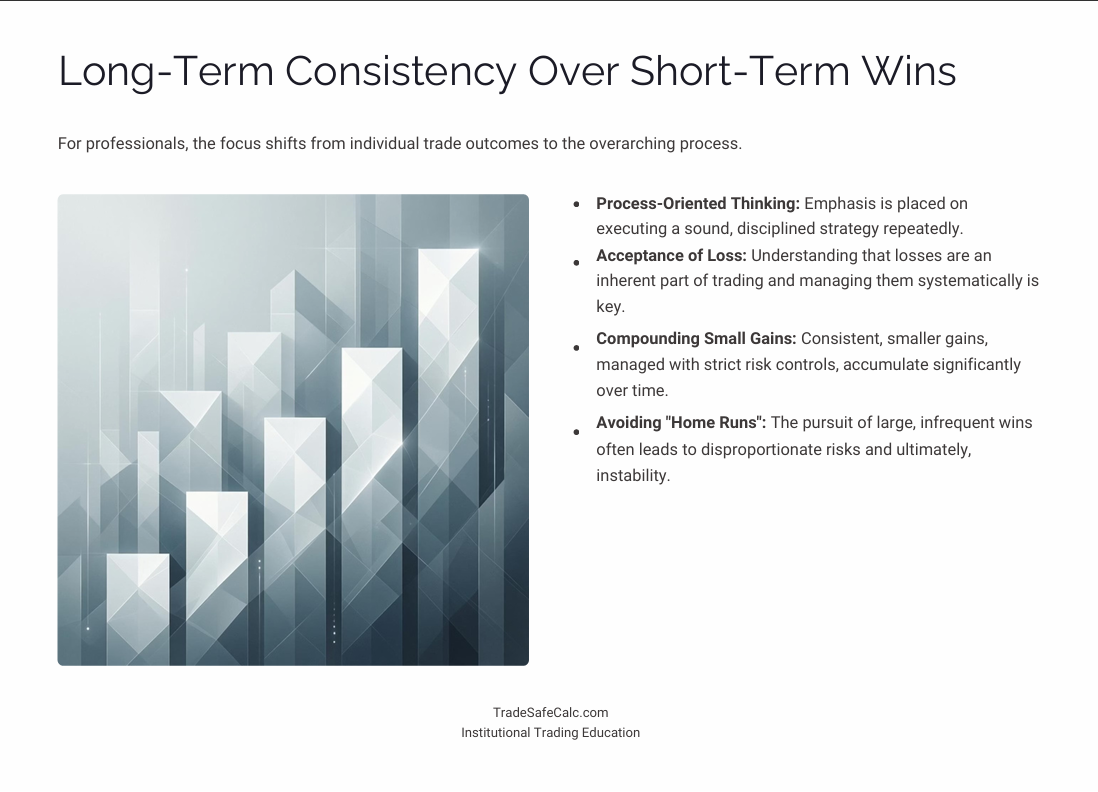
Many traders dream of one big trade that changes everything. While big wins feel exciting, they are not what keeps traders successful in the long run. Consistency is what allows an account to survive and grow over time. Professional traders focus on following the same process every day. They accept that some trades will lose and others will win. What matters is that losses are controlled and wins are taken according to plan. This steady approach removes pressure and keeps decision-making stable.
simple example explains this well. Imagine two traders with the same account size. One trader looks for big wins and risks a lot on each trade. The other trader aims for smaller, controlled gains while keeping losses limited. Even if the first trader hits a big win occasionally, one bad trade can wipe out weeks of progress. The second trader may grow slower, but the account moves upward more smoothly. Small gains, when repeated consistently, add up over time. This is often overlooked because it does not feel exciting. However, avoiding large losses is far more important than chasing large profits. By focusing on consistency instead of quick results, traders build confidence, reduce emotional stress, and stay in the market longer. In trading, staying consistent is often the real edge.
10. “Important Risk Disclosure”
Trading in financial markets always involves risk, and it is important to understand this before placing any trade. No market moves in a straight line, and losses are a normal part of the trading process. Even experienced traders face losing trades from time to time. This content is created only for educational purposes. It is meant to help readers understand how risk management works and why discipline matters in trading. It is not financial advice, investment guidance, or a recommendation to buy or sell any asset. Every trader’s situation is different, and decisions should be based on personal circumstances.
A common mistake beginners make is trading with money they cannot afford to lose. This often increases emotional pressure and leads to poor decisions. Using risk capital helps traders stay calm and think clearly, even during losing periods. Another important point is personal responsibility. Each trader is responsible for their own actions in the market. Tools, strategies, and educational material can support learning, but they cannot remove risk. Before making any financial decisions, it is always wise to do your own research and, if needed, consult a qualified financial professional. Understanding risk clearly is one of the first steps toward responsible and sustainable trading.
Created by TradeSafeCalc — Institutional Trading Education Platform